
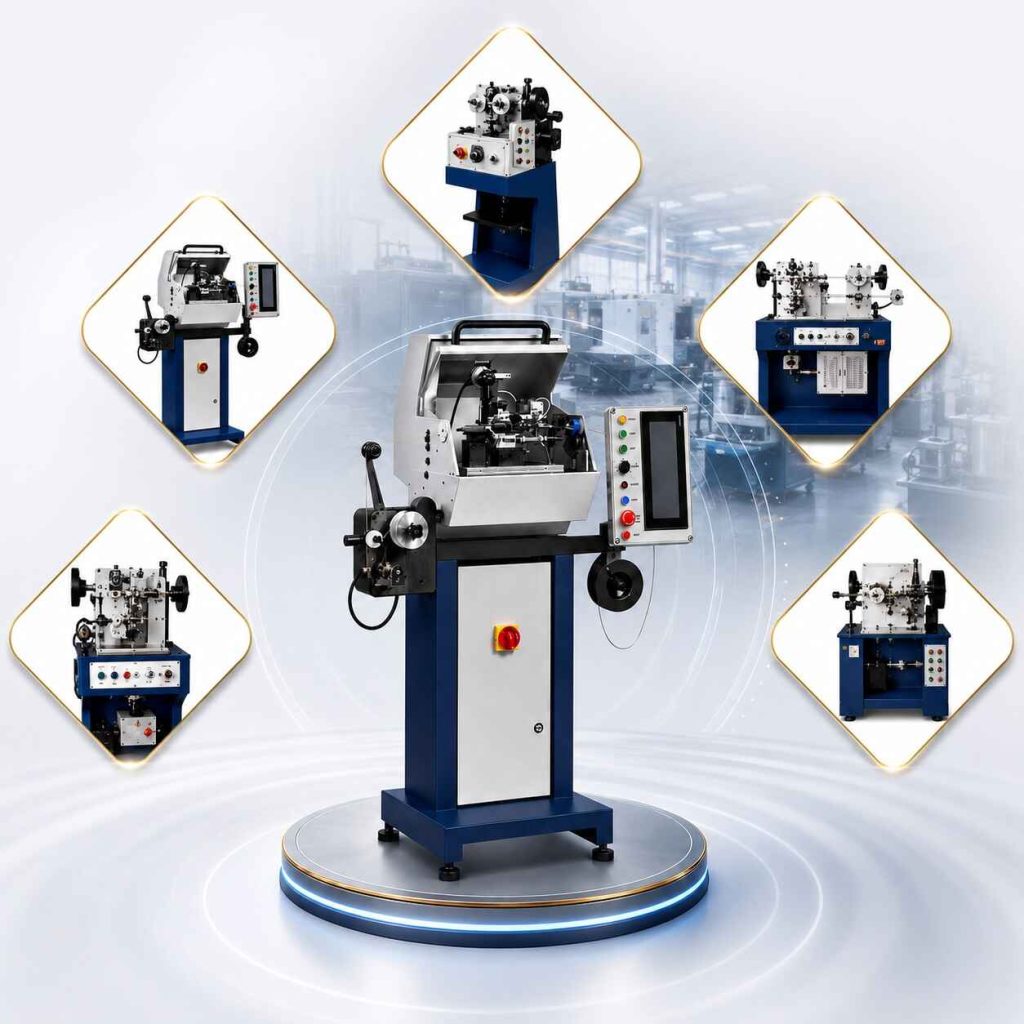
Buying high-quality jewellery machine tools is a serious decision for every jewellery manufacturing unit. With the help of the right tools, it becomes easy to manufacture and design premium quality jewellery. They not only support designing and production work, but also help improve consistency, maintain quality, and reduce manual work. However, with so many machines available, choosing the right one can be a tricky decision. And buying the wrong one means wasting money if they are of no use to your production unit.
That is why, in this blog, we are highlighting several factors that will make it easier for jewellery-making businesses to choose the right machines. You can choose them according to the jewellery type you manufacture, total production volume, precision requirements, and future expansion plans.
Start with your manufacturing requirements
Check which jewellery pieces you manufacture regularly. Like if your production unit deals mainly in manufacturing gold bangles, then a machine that supports gold chain manufacturing won’t help you. Different manufacturing units have different requirements and the tools for manufacturing them also vary. To help you understand better, we have shared the names of the machines according to the manufacturing requirements below.
| Jewellery Manufacturing Requirement | Suitable Machines |
| Rings and intricate ring components | Jewellery CNC Machine/Secondary Operation Machine |
| Bangles and decorative bracelet designs | Jewellery Forming Machine/Secondary Operation Machine |
| Gold and silver chains | Chain Making Machine |
| Detailed chain and jewellery finishing | Chain Faceting Machine |
| Jewellery components requiring precise marking | Laser Jewellery Machine |
| Stamped jewellery components | Stamping Dies / Stamping Equipment |
| Precision finishing and secondary operations | Secondary Operation Machine |
Go for machines that offer precision
We know that most manufacturers focus on choosing machines that offer high production speed. They want to produce more jewellery pieces in less time. But this often makes them forget about accuracy that every jewellery demands. Even small variations in dimensions, links or finishing can affect the final appearance of jewellery. So it is suggested that when investing in jewellery machine tools, check their precision, operating stability, construction quality and ability to maintain consistent output.
Consider both present and future needs
To save yourself from repeated purchases, ensure that your present production target should not be the only consideration. Think about future business expansion and the times when there will be huge demand. For such times, it is advised to choose jewellery machines with some additional capacity. It will not only help prevent a major investment in the future, but will also support your business during high demand. However, do not buy an extremely oversized machine that remains underutilized for most of the year.
Check maintenance and replaceable parts
Downtime can disrupt production schedules, especially when several processes are dependent on one machine. It is one of the major reasons why we always recommend buyers to ask about maintenance requirements beforehand. Also, check if they have availability of replacement parts and do they offer replacement service. This will save you from looking here and there in search of machine parts when replacement will be required.
Conclusion
The right jewellery machine tools are the ones that match your jewellery production requirements, workload and future goals. Instead of comparing machines only by price or speed, it is advised to evaluate precision, capacity, quality, maintenance and technical requirements. We at Amar Machine Tools not only manufacture quality jewellery making machines with lasting durability and high accuracy. But we also support buyers by guiding them to make right investment.
FAQs – Frequently Asked Questions
Consider the jewellery type, production volume, precision requirements, machine capacity, maintenance needs and available workspace.
Yes, jewellery machinery is available for specific operations such as chain making, faceting, laser processing, secondary operations and stamping.
Consistent dimensions and finishing help maintain uniformity across jewellery pieces and reduce the need for repeated manual corrections.
Evaluate your expected production increase and select equipment with sufficient capacity to handle higher workloads without unnecessary investment.